If you’ve ever hesitated to mark up a book because it feels “wrong,” you’re not alone. Many of us grew up believing that writing in books was a kind of sacrilege — something reserved for textbooks or used paperbacks. But what if the margin is exactly where your best thinking begins?
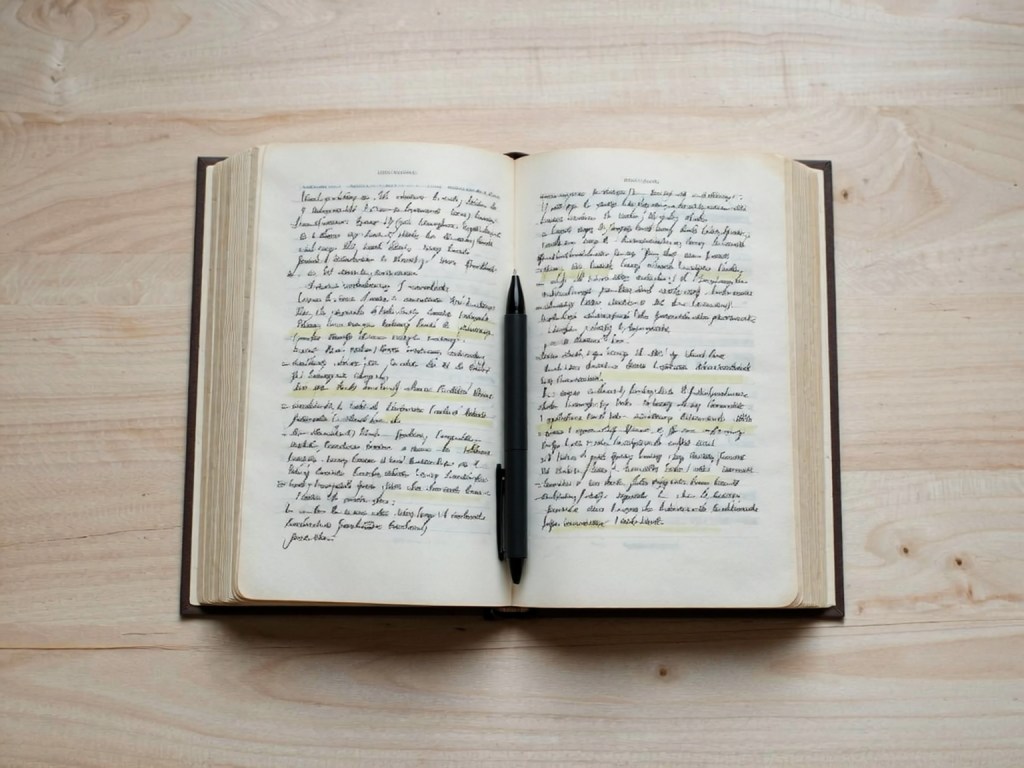
Welcome to the quiet art of marginalia — the simple act of writing in the margins of books. Far from defacing a page, marginalia can transform passive reading into active thinking. It’s a form of dialogue — between you, the author, and the ideas that meet in the space between.
🧠 Why Writing in Books Works
When you write while reading, your brain shifts gears from consumption to construction.
You’re no longer absorbing; you’re engaging.
- Active engagement: Writing notes, reactions, or questions keeps your mind alert and curious.
- Better retention: The physical act of writing strengthens memory encoding — you remember what you wrote about far longer than what you just read about.
- Critical thinking: Marginal notes force you to process and evaluate. You begin comparing ideas, challenging assumptions, and spotting patterns.
- Personalization: Your annotations reflect your unique journey through a book — what stood out, what confused you, what changed your mind.
In other words, marginalia transforms reading from a one-way transmission into a mental workout.
✍️ How to Practice Marginalia (Without Making a Mess)
Marginalia doesn’t have to look like chaos. A few simple systems can make your notes both useful and beautiful:
- Use symbols and shorthand.
Create your own code: “⭐” for insights, “?” for confusion, “💡” for ideas you might apply. - Write questions, not just notes.
Ask: “Do I agree with this?”, “How does this connect to X?”, “What would this mean in my life?”
Questions create thinking loops that deepen comprehension. - Mark pages for review.
When you finish a book, revisit only the pages with heavy notes — your personal “highlight reel.” - Mix media.
If you can’t write directly in the book, use sticky tabs or a digital reader with annotation tools (like Kindle’s notes feature or Readwise). - Summarize your margins.
After finishing a book, distill your notes into a short summary. This is where comprehension turns into wisdom.
📚 The Invisible Conversation Between Reader and Author
Marginalia is more than note-taking — it’s a quiet act of co-creation.
When you respond in the margins, you’re not just understanding the author; you’re extending their ideas.
You might disagree, reinterpret, or link them to another thinker. Suddenly, your bookshelf becomes a network of conversations — each margin a reminder of what you thought and felt at that time.
Years later, reading your old annotations can feel like time travel: meeting your younger self in the company of great minds.
🔄 From Reading to Thinking to Living
Marginalia bridges a gap most readers struggle with — turning inspiration into integration.
It helps you carry lessons off the page and into your decisions, conversations, and habits.
Each note you make sharpens your mental muscle for analysis, helping you:
- Identify patterns across disciplines
- Develop original ideas faster
- Retain wisdom that’s actually usable in daily life
In short, marginalia makes you not just a better reader, but a better thinker.
🌟 The Takeaway
Next time you open a book, don’t just read it — talk to it.
Underline boldly. Argue in the margins. Circle phrases that move you. Draw arrows between ideas that rhyme.
Your annotations are not graffiti; they’re breadcrumbs of your own evolving thought.
That’s the true magic of marginalia — it turns reading into reflection, and reflection into growth.
 VD
VD 
Leave a comment