The Problem: Modern Life Is Designed for Sitting
We sit to work. We sit to eat. We sit to rest after sitting all day.
Even those who “work out” regularly often spend 90% of their waking hours sedentary. And while an hour at the gym has real benefits, it can’t fully undo the effects of ten hours at a desk.
Enter movement snacks — bite-sized bursts of physical activity that you sprinkle throughout your day instead of saving all your movement for one big workout session.
They’re short, intentional, and surprisingly powerful. You don’t need equipment, gym clothes, or even much time. Just a few minutes of moving — often — is enough to reset your energy, posture, and focus.
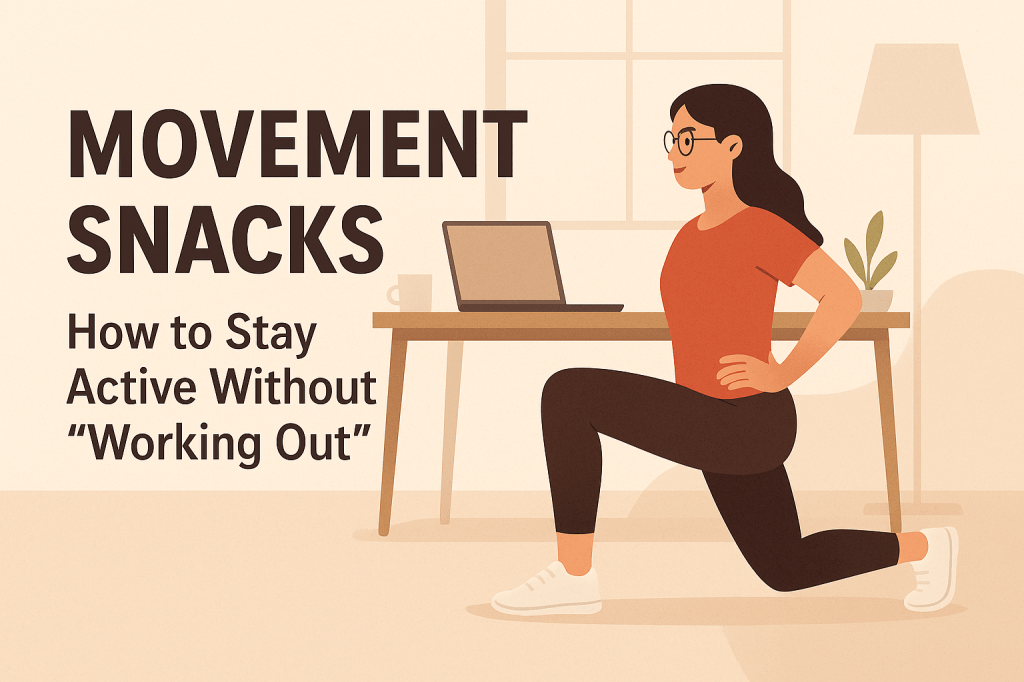
What Are Movement Snacks?
A movement snack is any brief period of movement that breaks up long stretches of sitting.
Think of them as the physical version of getting up to refill your coffee — except instead of caffeine, you’re refueling your body.
Examples include:
- A quick stretch between meetings
- Standing up for a few squats while your code compiles
- Taking the stairs instead of the elevator
- Doing 10 push-ups before checking your phone again
- Walking while you brainstorm or take calls
These “snacks” don’t replace traditional exercise — they complement it. They help you stay mobile, energized, and mentally sharp, especially on days when you can’t fit in a full workout.
Why Movement Snacks Work (The Science)
Human bodies were built to move often, not just hard. When you sit for long periods, your blood flow slows, your posture collapses, and your metabolism downshifts. Even light movement — like standing, stretching, or walking — reverses many of those effects.
Studies show that short, frequent movement breaks can:
- Improve focus and productivity
- Reduce stiffness and lower-back pain
- Stabilize blood sugar and energy levels
- Boost creativity and problem-solving
- Improve mood through quick endorphin releases
And because these movements are easy and repeatable, they build consistency — the true key to long-term health.
How to Add Movement Snacks to Your Day
Let’s be real: you don’t need another complicated fitness routine. You need micro-habits that fit naturally into your existing day. Here’s how to design them.
1. Pair Movement With Existing Triggers
The easiest way to make a new habit stick is to attach it to something you already do.
Everyday triggers like “after I send this email” or “before I make coffee” can become automatic cues for small movements.
Examples:
- After each Zoom meeting → 10 standing twists
- While brushing your teeth → heel raises or squats
- Waiting for code to run → shoulder rolls or wall push-ups
- Every time you refill your water → one lap around the house
These micro-bursts compound. By day’s end, you’ll have moved more than most gym-goers do between workouts.
2. Build a Movement Menu
Variety keeps things interesting. Create a “menu” of 10-15 simple moves you can do anywhere — no special gear or space required.
Try mixing:
- Mobility: shoulder circles, hip openers, cat-cow stretches
- Strength: bodyweight squats, lunges, planks, push-ups
- Balance: single-leg stands, calf raises
- Cardio: jumping jacks, brisk stairs, fast walking
Pick a few favorites. Write them on a sticky note near your desk. When you feel your energy dip, pick one at random and do it for 30–60 seconds.
3. Use the Pomodoro Method — for Your Body
Many of us already use the Pomodoro technique for focus: 25 minutes of work, 5 minutes of rest.
Apply the same rhythm to your movement.
Set a timer to remind you to stand up and stretch every half hour. During those breaks, do a 60-second “snack.”
By the end of the day, you’ll have done 15–20 mini-sessions — no gym required.
4. Take Advantage of Transition Moments
Most people think they don’t have time to move. The secret? You already do — you’re just not using the in-between moments.
Use transition times as mini workouts:
- Between calls
- Before lunch
- When switching tasks
- As part of your morning or bedtime wind-down
You don’t need an hour — you just need intention.
5. Redefine What Counts as “Exercise”
Many people skip movement because they think it “doesn’t count” unless it’s intense.
But health isn’t built only in sweat sessions. It’s built in small, consistent decisions.
Walking your dog, gardening, carrying groceries, cleaning, or playing with your kids — these are all valid movement snacks.
Once you redefine what “counts,” you’ll notice opportunities to move everywhere.
Movement Snacks for Remote Workers
If you work from home, it’s easy to go hours without standing.
Here are a few desk-friendly ways to keep your body awake and your brain sharp:
- Do calf raises during calls
- Stretch your wrists and forearms hourly
- Swap your chair for a standing desk (even part-time)
- Take 5-minute walking breaks every hour
- Keep a resistance band nearby for quick pulls or rows
Think of it as functional mobility maintenance — keeping your machine well-oiled so it runs longer and better.
The Cumulative Effect
One 30-minute workout can’t fully offset a sedentary lifestyle. But dozens of micro-movements throughout the day can.
These tiny moments of motion add up to a massive difference over time — not just for your body, but for your mind.
Movement snacks make you more aware of your body again. They reconnect you to the physical world in small, meaningful bursts.
You start to notice your posture, your breath, your surroundings — and eventually, your energy and confidence follow.
Start Small, Stay Consistent
You don’t need to overhaul your life. Just sneak in a little more movement each day.
Start with one 2-minute session each hour. Build from there.
Because staying active doesn’t always mean working out.
Sometimes, it just means remembering to move.
Final Thought
Movement snacks are a modern solution to a modern problem: endless sitting, endless screens, and endless fatigue.
They remind us that health doesn’t live only in the gym — it lives in every small, intentional moment when you choose to stand, stretch, walk, or breathe deeply.
Tiny moves. Big impact. Every day.
 VD
VD 
Leave a comment