We used to think posture was something your parents nagged you about at the dinner table. Today, it’s become a full-blown lifestyle side effect—a quiet reshaping of the human body driven by screens. Phones, laptops, tablets, and monitors have changed how we sit, how we look down, and even how we breathe. And if you’ve felt the tight neck, the rounded shoulders, the lower-back ache, or the creeping sense that your spine is slowly curling into a question mark, you’re not imagining it.
This is digital posture.
The good news? You can reverse it faster than you think.
In this guide, we break down what screen time is doing to your body, why it feels so hard to stop, and the small, high-impact tweaks that help you rebalance your posture in days—not months.
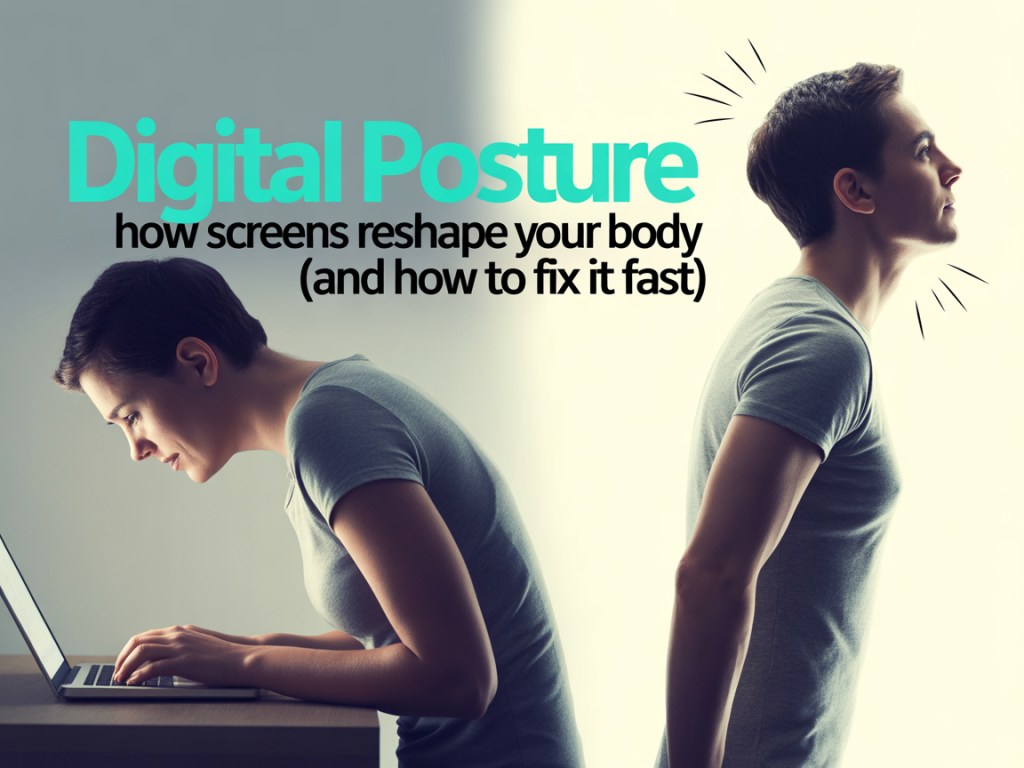
How Screens Quietly Reshape Your Body
1. The “Forward-Head” Shift
When you look down at your phone, your head moves forward—sometimes just an inch or two. That tiny shift matters. For every inch your head moves ahead of your shoulders, it adds 10–12 pounds of extra pressure to your spine. Do that for hours, day after day, and your neck begins to remodel itself around that new demand.
That’s why your upper back may feel tight, and why your neck cracks or clicks more than it used to.
2. The Rounding of the Shoulders
Laptop posture encourages “internal rotation”: shoulders rolling in, chest collapsing, back muscles weakening. Over time, this leads to:
- A slight hunch
- Reduced lung expansion
- Upper-back stiffness
- Less shoulder mobility
If overhead movements feel harder than they used to, screen posture is often the culprit.
3. Lower-Back Fatigue and the “Tech Tilt”
Screens pull you forward, causing the pelvis to tip backward. This creates a C-shaped spine that puts extra pressure on your lumbar discs. Many people think they have weak cores or “bad backs,” but the real issue is often just static sitting in the wrong tilt for too long.
4. The Hidden One: Breathing Changes
When the chest collapses, your lungs and diaphragm have less space to expand. You shift to shallow breathing, which makes you:
- Less energized
- More stressed
- More mentally fatigued
This is why long screen sessions often leave you feeling tired even if you didn’t physically move.
Why Digital Posture Feels Hard to Escape
Screens are designed for head-forward engagement.
Your phone sits low in your hands. Your laptop sits low on your desk. Your brain wants your eyes on the screen, so your body adapts to the screen’s level—not the other way around.
Sitting is frictionless.
It’s easier for your brain to maintain a slouch than to maintain alignment. Gravity and convenience win unless you add intentional structure.
Your body adapts to the shape you use most.
Muscles shorten and lengthen based on demand. Sit long enough in a C-shape, and your body considers it the new default.
The key is not avoiding screens—it’s creating small, automatic counter-habits.
How to Fix Digital Posture Fast
You don’t need a posture brace or a chiropractor on speed dial. The fastest fixes come from small, high-leverage changes that rebalance your muscles and position your screens properly.
Below are the most effective 80/20 posture resets—the tiny habits that create the biggest results.
1. The 20-Second “Shoulder Reset”
Do this once every hour—or every time you switch tasks.
- Roll your shoulders up, back, and down, as if placing them into a jacket.
- Lift your chest slightly.
- Draw your chin back 1 inch (not down).
- Take one deep, slow breath.
This one movement pattern breaks 90% of the slouch cycle.
2. The Two Best Exercises for Digital Posture
A. Doorway Chest Stretch (1 minute)
Stand in a doorway, elbows at 90 degrees, forearms against the frame. Step forward and let your chest gently stretch open.
- Opens tight chest muscles
- Counters shoulder rounding
- Improves breathing immediately
Hold for one minute total (20–30 seconds each side if asymmetrical).
B. Wall Angels (10 reps)
Stand with your back against the wall, feet a few inches in front. Press your lower back, upper back, and head gently toward the wall. Raise your arms slowly overhead like making a snow angel.
- Strengthens upper back stabilizers
- Re-teaches your body proper alignment
- Builds endurance for long work sessions
This is the most powerful posture exercise you can do in under 2 minutes.
3. Lift Your Screens to Eye Level (Instant Relief)
This single tweak fixes neck posture instantly.
For laptops:
Use a stand (or a stack of books) to raise the screen so the top sits at eye height. Then use an external keyboard and mouse.
For phones:
Hold your phone at chest or eye level. If that feels awkward, rest your elbow on your torso to support your arm.
You’ll feel the neck relief immediately.
4. Use the “90/90/90 Rule” for Sitting
Aim for:
- 90° knees
- 90° hips
- 90° elbows
This keeps your spine neutral and distributes your weight evenly. Add a small pillow or rolled towel behind your lower back if needed.
5. Add the 3-Break Rule to Every Hour
These micro-breaks reset your posture, circulation, and breathing:
- Stand for 30 seconds
- Look across the room or out a window for 20 seconds
- Roll your shoulders for 10 seconds
Total time: 1 minute per hour.
Impact: enormous.
6. Evening “Unwind the Screen Day” Routine (3 minutes)
Do this at the end of your work or screen time:
- Cat-Cow (30 seconds)
Restores spinal movement after hours of stiffness. - Hip Flexor Stretch (45 seconds each side)
Sitting shortens your hip flexors; this lengthens them back out. - Thoracic Extension Over a Pillow (1 minute)
Lie on your back, pillow between your shoulder blades, and let your chest gently open.
This routine makes your spine feel brand new.
The Fastest Posture Wins Come from Awareness + Micro-Habits
You don’t need dramatic life changes—or to swear off screens. You just need consistent, small resets across your day.
Here are the highest-leverage habits to start with:
- Raise your screens to eye level.
- Do the 20-second shoulder reset hourly.
- Do chest stretches + wall angels daily.
- Set a 1-minute micro-break timer for every hour.
After one week, you’ll notice:
- Less neck tension
- Easier breathing
- Better focus
- A taller, more open posture
- More energy throughout the day
And within a month? Many people say they feel like their whole upper body has “unlocked.”
Your Body Can Absolutely Rebalance—Faster Than You Think
Digital posture isn’t permanent. It’s just patterned. And patterns can be rewritten.
Screens may shape your body today—but with a handful of small, consistent adjustments, you can reshape it right back.
 VD
VD 
Leave a comment