When it comes to building healthy eating habits, it’s easy to feel overwhelmed. With all the conflicting diet advice, trends, and social media influencers offering the “secret” to perfect health, you might wonder where to even begin. Add to that the pressures of modern life—busy schedules, limited time to cook, and the temptation of quick convenience foods—and sticking to a healthy eating routine can feel like an uphill battle.
But here’s the good news: Building healthy eating habits doesn’t have to be overwhelming, complicated, or require you to become a full-fledged foodie. In fact, you can develop lasting, sustainable eating habits that fit seamlessly into your lifestyle without giving up your favorite foods or spending hours in the kitchen. It’s about making simple, consistent changes that stick long-term.
In this post, we’ll explore actionable strategies to help you build healthy eating habits that last—without the stress or complexity. These tips are designed to be realistic, sustainable, and easy to incorporate into your daily routine, no matter how busy you are.
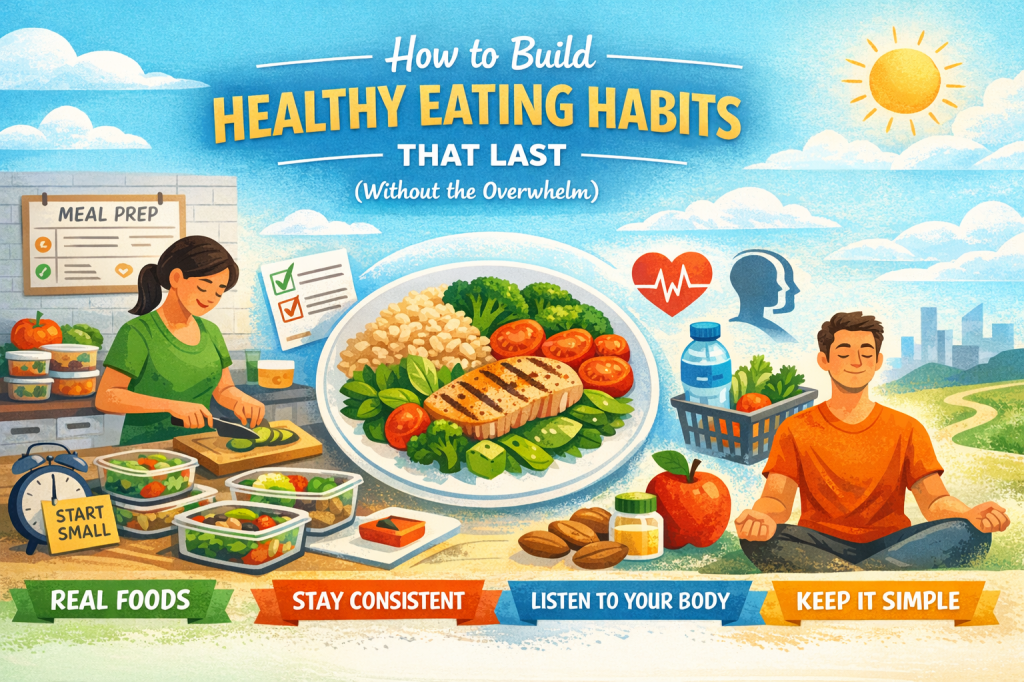
1. Start Small and Build Gradually
One of the most common mistakes people make when trying to adopt healthier eating habits is going all in, too quickly. You might feel tempted to overhaul your entire diet—cutting out all processed foods, giving up sugar, and committing to an extreme fitness or health regimen. But this approach is often unrealistic and leads to burnout.
The Solution: Focus on small, manageable changes rather than a drastic transformation. Instead of completely eliminating foods, start by adding healthier options to your meals. Swap one sugary snack for fruit or replace a portion of your plate with vegetables at lunch. Over time, these small adjustments will add up to big changes.
Start with a simple goal, like eating at least one home-cooked meal a day or drinking more water. Once those habits become second nature, gradually introduce more changes. The key is consistency, not perfection.
2. Focus on Real, Whole Foods
Much of the confusion surrounding healthy eating comes from restrictive diets that cut out entire food groups or require constant calorie tracking. These diets often focus more on rules than nutrition, which can make healthy eating feel complicated and unsustainable.
The Solution: Instead of worrying about what’s off-limits, focus on real, whole foods. These are foods that are minimally processed, nutrient-dense, and naturally rich in vitamins, minerals, and fiber. Think fresh vegetables, fruits, lean proteins, whole grains, and healthy fats.
Whole foods are versatile, easy to prepare, and don’t require you to follow complex meal plans. Start by filling half of your plate with vegetables at every meal. Include a source of protein and a whole grain or healthy fat, and you’ve already built a balanced, nutritious meal. These simple guidelines will go a long way in supporting your health without the overwhelm.
3. Meal Prep to Avoid Stress
A major barrier to healthy eating is not knowing what to eat or being too busy to cook. But eating healthy doesn’t have to mean spending hours in the kitchen every day. In fact, the most successful healthy eaters are those who plan ahead and meal prep in advance.
The Solution: Dedicate a few hours on the weekend (or whenever your schedule allows) to plan and prep meals for the week. This doesn’t mean you need to cook everything from scratch or eat the same meal every day. But by preparing ingredients ahead of time—like chopping veggies, cooking grains, or roasting proteins—you’ll have healthy meals and snacks ready to go when hunger strikes.
You don’t have to overcomplicate meal prep either. For example, you can make a big batch of quinoa, roast some chicken, and chop vegetables to store in the fridge for quick salads, wraps, or bowls throughout the week. The goal is to have healthy, convenient options ready so you’re not tempted to reach for something less nutritious when you’re pressed for time.
4. Make Eating Healthy Convenient
One of the reasons we tend to choose unhealthy options is that they’re often more convenient. Processed foods, snacks, and fast food are readily available, and when you’re hungry and short on time, they can seem like the easiest choice.
The Solution: Make healthy eating as convenient as possible. Stock your pantry and fridge with healthy staples like cut-up vegetables, fruit, nuts, yogurt, and whole grain options. Consider preparing healthy snacks, such as homemade energy bars or overnight oats, to have on hand when you’re craving something quick.
Another simple way to make eating healthy more convenient is to pack your own meals and snacks. By having healthy options on hand when you’re out and about, you can avoid being tempted by less nutritious alternatives.
It’s not about making everything from scratch every day—it’s about creating easy access to foods that support your health, no matter how busy you are.
5. Listen to Your Body’s Hunger Cues
Many of us have been conditioned to eat at certain times of the day—three square meals, snacks in between—but that schedule doesn’t always align with our body’s natural hunger signals. Ignoring those signals can lead to overeating or undereating, and sometimes it’s easy to forget that hunger is a cue for nourishment, not just for routine.
The Solution: Learn to listen to your body. Eat when you’re hungry, not just because it’s “lunchtime.” Pay attention to how your body feels before and after eating, and try to stop when you’re satisfied, not full. This intuitive approach to eating helps you stay in tune with your body’s actual needs and encourages more mindful eating.
By learning to recognize true hunger and fullness cues, you’ll also avoid the trap of mindless eating or emotional eating. Being present during meals and focusing on how food makes you feel can help you form a healthier relationship with food.
6. Build Consistency Over Perfection
Perfectionism is the enemy of progress. When it comes to eating healthy, striving for perfection—whether it’s always eating the “right” foods, never indulging, or maintaining strict portion control—can create unnecessary stress and guilt.
The Solution: Embrace consistency, not perfection. It’s okay to indulge in your favorite treats every once in a while, and it’s okay if you don’t always have the healthiest meal. What matters is the overall pattern of your eating habits. If you focus on building consistent healthy habits—like eating whole foods most of the time, making time for meals, and listening to your body—you’ll see lasting results without the stress.
Remember, one meal or snack doesn’t define your progress. It’s about how you approach your eating habits over time.
7. Find Your Healthy Eating Style
Healthy eating isn’t one-size-fits-all. What works for one person may not work for another, and that’s okay. The goal is to find an eating style that aligns with your personal preferences, lifestyle, and goals, so you can stick with it long-term.
The Solution: Experiment with different approaches and see what feels sustainable for you. You might try a plant-based diet, or you might prefer a balanced omnivore approach. Some people thrive on intermittent fasting, while others find regular meals to be more effective. The key is to listen to your body and find what works best for your energy, mood, and health.
By finding a healthy eating style that you enjoy, you’ll be more likely to stick with it and make it a lasting part of your routine.
8. Keep It Simple
The more complicated we make healthy eating, the more likely we are to fall off track. With endless food trends, recipes, and expert advice, it’s easy to overthink things and feel like you need to do it all perfectly.
The Solution: Simplify your approach. Healthy eating doesn’t need to be a gourmet endeavor. Focus on eating a variety of real, whole foods, stay hydrated, and keep meals simple. A balanced plate of vegetables, protein, and a whole grain is all you need for a nutritious meal.
With simple habits in place, you’ll reduce the mental load of meal planning and get back to enjoying food without all the stress.
Final Thoughts
Building healthy eating habits that last doesn’t have to be complicated or overwhelming. By starting small, focusing on real foods, planning ahead, and listening to your body, you can create sustainable eating habits that fit seamlessly into your life. Consistency is key—so keep it simple, stay patient with yourself, and trust that small changes will lead to big results over time.
Related Reading
If you enjoyed this post, you might find these related articles helpful:
- How to Build a Healthy Morning Routine for Wealth, Focus, and Productivity
- Designing a Life That Travels Well: A Framework for Sustainable, Location-Flexible Living
- The First $100K Is the Hardest: Why Reaching $100,000 Changes Your Financial Freedom
- How to Improve Mental Clarity and Make Better Decisions: Simplify Your Mind
- How to Build a Consistent Reading Habit That Lasts for Personal Growth
- How to Stay Productive with a 4-Day Workweek as a Digital Nomad: Achieve More in Less Time
- Training for the Life You Want at 60: Strength Training for Longevity (Not Just Looks)
 VD
VD 
Leave a comment