Reading books is an excellent way to expand your knowledge and grow as a person, but how much of what you read actually sticks with you in the long run? Whether you’re reading for personal growth, professional development, or simply for enjoyment, we all know that the act of reading isn’t enough. To truly benefit from the books you read, you need a system that allows you to retain key information and apply it effectively to your life.
One of the best ways to ensure you’re getting the most out of your reading is to create a book review system. But don’t worry—this isn’t about writing lengthy, formal reviews or critiquing books like a professional reviewer. Instead, this system is designed to help you actively engage with the material, solidify your learning, and apply the ideas to your everyday life.
In this post, I’ll show you how to develop your own book review system that will help you retain more information, maximize your learning, and transform the way you read.
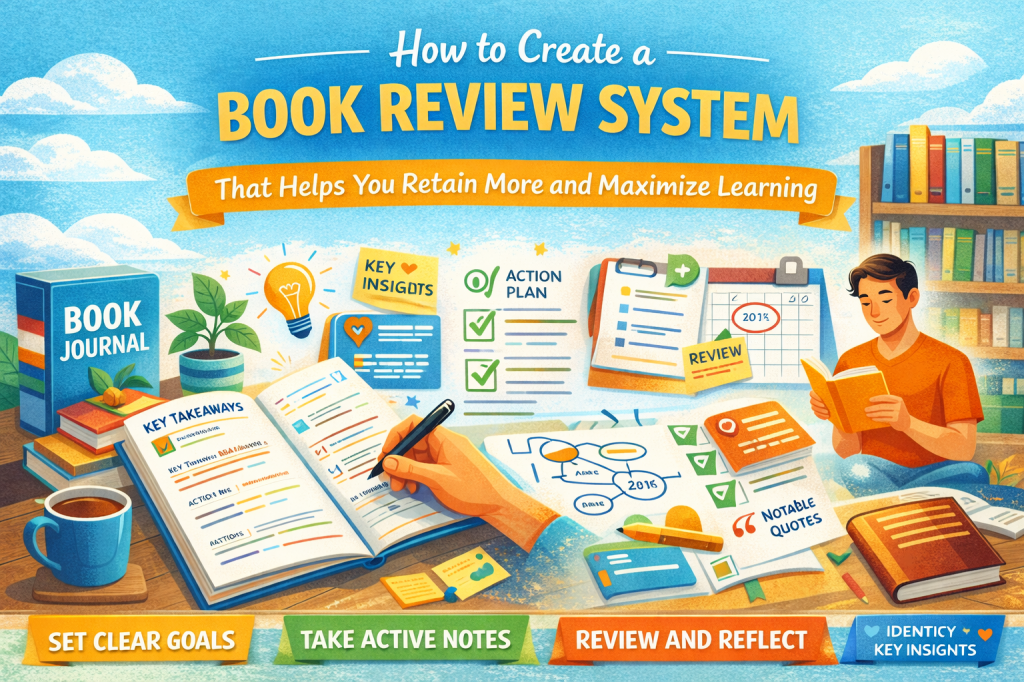
1. Start with Clear Goals for Each Book
Before you even pick up a book, take a moment to set clear, specific goals for what you want to get out of it. Are you reading for inspiration? To learn a new skill? To gain insights into a particular topic? Having a goal in mind will help you stay focused and intentional while reading. It will also guide your review process, so you can identify the most important takeaways.
The Solution: Ask yourself the following questions before you start reading:
- What do I hope to learn or achieve from this book?
- How does this book relate to my personal or professional goals?
- What specific problem or challenge am I trying to solve with this book?
Setting goals before reading helps create a framework for reviewing the book later, ensuring that your review is focused on the most relevant and useful information.
2. Take Active Notes While You Read
One of the most effective ways to retain information from a book is to take notes while you read. But passive note-taking—like highlighting or writing down vague thoughts—won’t cut it. To maximize retention, you need to actively engage with the material.
The Solution: Use a system that works best for you, but the goal is to actively reflect on and summarize the material. Here are a few approaches you can try:
- Marginalia: Jot down thoughts, questions, or comments in the margins of the book or on sticky notes. These annotations will help reinforce key ideas and make it easier to revisit important sections later.
- Mind Maps: Create mind maps that connect the key ideas, concepts, and takeaways from each chapter or section. This visual approach can help you see how everything fits together and improve your recall.
- Summary Notes: After reading each chapter or section, write a brief summary of the key ideas in your own words. Focus on what’s most important and why it matters to your life.
The act of writing down key takeaways forces your brain to process the information more deeply, which significantly improves retention.
3. Identify Key Insights and Actionable Takeaways
While reading, make it a habit to identify the most important insights or actionable takeaways that resonate with you. These are the pieces of information that you’ll want to review and apply later.
The Solution: As you read, highlight or write down specific quotes, strategies, or ideas that stand out to you. Then, take it a step further by asking:
- How can I apply this idea to my personal or professional life?
- What is one concrete action I can take based on this insight?
- Does this concept challenge any of my existing beliefs or assumptions? If so, how?
Identifying actionable takeaways not only helps you retain the information but also ensures that you’re actively engaging with the material and planning to implement what you’ve learned.
4. Create a Post-Reading Review System
After you finish a book, it’s time to review the material. The post-reading review is crucial to reinforce what you’ve learned and create a lasting memory of the book’s ideas. But again, it’s important to go beyond just summarizing the book’s content. Your review should be reflective and focused on the application of the information.
The Solution: Here’s a simple framework for your book review:
- Summary of Key Takeaways: Write a brief summary of the main ideas or arguments of the book. Focus on the concepts that were most relevant to your goals.
- Actionable Insights: Identify at least 3–5 key insights or pieces of advice that you can put into action immediately. For each, write down how you plan to implement these ideas in your life or work.
- Personal Reflection: Reflect on how the book impacted you. Did it change your perspective on a certain issue? Did it challenge your thinking? Write down any emotional or intellectual shifts you experienced while reading.
- Key Quotes or Passages: Include quotes that resonate with you. These can be useful for inspiration or as reminders of the book’s key messages.
- Rating and Recommendation: Finally, rate the book based on its value to your personal growth or learning. Would you recommend it to others? Why or why not?
Taking time for this post-reading review will help you internalize the material and make the key ideas more memorable.
5. Keep a Book Journal for Long-Term Retention
One of the most effective ways to make sure the lessons from the books you read stick is to keep a book journal. This doesn’t have to be anything fancy, just a simple journal where you document your reviews, reflections, and takeaways from each book.
The Solution: Create a dedicated space where you record all the books you read and follow your review system for each one. Over time, you’ll build a catalog of valuable insights and actionable takeaways. Here’s how you can structure your journal:
- Book Title and Author
- Reading Goal: What were you hoping to learn or achieve with this book?
- Key Takeaways: What were the top insights from the book?
- Action Plan: How will you implement the lessons you learned?
- Personal Reflection: How did the book affect your thinking or approach to certain areas of life?
Your book journal becomes a powerful resource for revisiting the key ideas that have had the biggest impact on your life.
6. Review and Revisit Your Notes Regularly
The final step in creating a book review system that helps you retain more and maximize learning is revisiting your notes and reviews. Information retention is enhanced when you review material periodically.
The Solution: Schedule a weekly or monthly review session where you go over your book journal and notes. This reinforces what you’ve learned, helps you apply the concepts to new situations, and keeps the material fresh in your mind.
Final Thoughts
Creating a book review system that helps you retain more and maximize learning isn’t just about reading a book and moving on to the next. It’s about actively engaging with the material, extracting the key insights, and applying them to your life. With a solid review system in place, you’ll not only retain more information but also transform the way you approach learning through books.
Remember, reading is an investment in your personal growth, but it’s how you engage with and apply what you read that truly matters. So start today by building your own book review system, and watch how it deepens your understanding and accelerates your learning.
Related Reading
If you enjoyed this post, you may find these articles helpful:
- How to Build a Consistent Reading Habit That Lasts for Personal Growth
- How to Leverage Time for Financial Freedom: Time Management Strategies for Wealth
- The Reading Flywheel: How to Remember, Apply, and Learn More From Books
- How to Retain More From What You Read (Without Taking Notes)
- How to Improve Your Thinking: Why Reading Alone Isn’t Enough
 VD
VD 
Leave a comment