How deliberate discomfort builds a stronger body, sharper mind, and longer life — one cold shower at a time.
You’ve probably heard someone rave about cold showers. Maybe a podcaster. Maybe a coworker who swears by ice baths. Maybe you’ve tried it yourself — stood under freezing water for ten seconds, gasped, and thought, “Why would anyone do this voluntarily?”
Fair question.
But here’s what’s interesting: cold exposure isn’t just a trend. It’s one of the oldest, most well-studied tools for improving recovery, boosting mental clarity, and building long-term resilience. Cultures across centuries — from Scandinavian ice swimming to Japanese cold water rituals — have practiced it long before anyone called it “biohacking.”
The modern science is now catching up. And it turns out, a few minutes of deliberate cold can influence your nervous system, your immune function, your metabolism, and even how you age.
Let’s break down what actually happens when you expose your body to cold — and how to use it wisely.
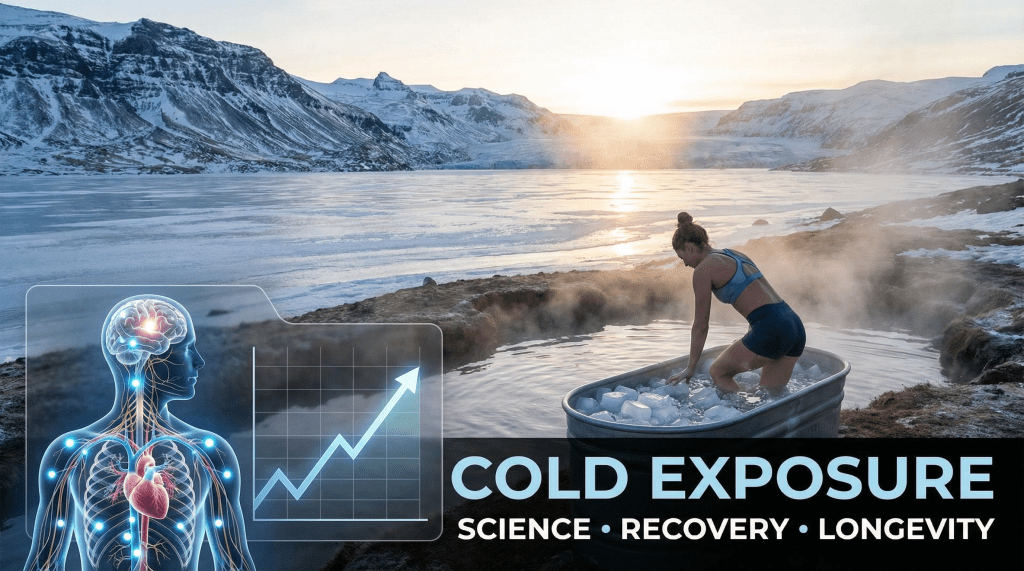
What Is Cold Exposure?
Cold exposure refers to the intentional practice of subjecting your body to cold temperatures for a short, controlled period. This can take many forms:
- Cold showers (the most accessible entry point)
- Ice baths or cold plunges (more intense, typically 1–5 minutes)
- Outdoor cold exposure (cold weather walks, winter swimming)
- Cryotherapy chambers (clinical settings, very short bursts)
The key word here is intentional. You’re not just shivering because you forgot your jacket. You’re choosing discomfort as a stimulus — the same way you choose to lift a heavy weight or run an extra mile.
And like exercise, the benefits come not from the stress itself, but from your body’s adaptation to that stress.
The Science: What Happens When You Get Cold?
When cold water hits your skin, your body launches a rapid cascade of physiological responses. Understanding these helps explain why the benefits are so wide-ranging.
1. Sympathetic Nervous System Activation
Cold triggers your “fight or flight” system — but in a controlled, brief way. This causes:
- A spike in norepinephrine, a neurotransmitter linked to focus, attention, and mood
- Increased heart rate and blood pressure temporarily
- A surge of alertness that many describe as feeling “switched on”
Studies show that even a short cold shower can increase norepinephrine levels by 200–300%. That’s a significant neurochemical shift — without caffeine, supplements, or medication.
2. Vagus Nerve Stimulation
The vagus nerve is the longest cranial nerve in your body and a key regulator of your parasympathetic (“rest and digest”) nervous system. Cold water on your face, neck, and chest stimulates the vagus nerve, which over time:
- Improves your ability to calm down after stress
- Enhances heart rate variability (HRV) — a key marker of resilience
- Supports better digestion, sleep, and emotional regulation
This is one of the reasons cold exposure is often recommended alongside breathwork. Together, they train your nervous system to shift gears more effectively — from stress to calm, and back again.
3. Reduced Inflammation
Cold exposure causes vasoconstriction (narrowing of blood vessels), which helps reduce swelling and inflammation in tissues. When you warm up afterward, blood flow increases again, flushing metabolic waste and delivering fresh nutrients.
This is the mechanism behind ice baths in athletic recovery. But the anti-inflammatory effect isn’t just for athletes. Chronic low-grade inflammation is linked to:
- Heart disease
- Type 2 diabetes
- Cognitive decline
- Accelerated aging
Regular cold exposure may help keep systemic inflammation in check — a meaningful factor for longevity.
4. Brown Fat Activation and Metabolic Health
Your body contains two types of fat:
- White fat — stores energy (the kind most people want to lose)
- Brown fat — burns energy to generate heat
Cold exposure activates brown fat, which increases your metabolic rate and improves your body’s ability to regulate temperature. Research published in the Journal of Clinical Investigation found that regular cold exposure can increase brown fat activity significantly, improving insulin sensitivity and glucose metabolism.
In simple terms: cold trains your body to burn fuel more efficiently.
5. Mood and Mental Health
This might be the most underrated benefit. Cold exposure has been shown to:
- Reduce symptoms of depression and anxiety
- Improve overall mood and emotional stability
- Create a natural sense of accomplishment and mental toughness
The norepinephrine and endorphin release triggered by cold water creates a reliable, repeatable mood boost. Many practitioners describe it as a “reset button” — especially on sluggish, low-energy mornings.
A 2008 study published in Medical Hypotheses proposed that cold showers could serve as a potential treatment for depression, due to the dense concentration of cold receptors on the skin that send overwhelming electrical impulses to the brain, producing an antidepressant effect.
Cold Exposure and Recovery: What the Research Says
Athletes have used cold water immersion for decades. But the nuance matters.
What Cold Exposure Helps With:
- Reducing muscle soreness (delayed onset muscle soreness, or DOMS)
- Lowering perceived fatigue after intense exercise
- Speeding up nervous system recovery between training sessions
- Decreasing inflammation after high-impact or high-volume workouts
The Timing Caveat:
Recent research suggests that cold immersion immediately after strength training may blunt some of the muscle-building adaptations you’re trying to stimulate. The inflammatory response after lifting is part of how muscles grow.
The practical takeaway:
- Use cold exposure on rest days or several hours after strength training
- Use it immediately after endurance or high-intensity cardio if recovery is the priority
- Think of it as a recovery tool with a specific use case — not something to apply blindly after every workout
Cold Exposure and Longevity: The Long Game
This is where things get especially interesting for anyone thinking about healthspan — not just lifespan.
Hormesis: Controlled Stress as Medicine
Cold exposure works on the principle of hormesis — the idea that small, controlled doses of stress make biological systems stronger. It’s the same principle behind:
- Exercise (micro-damage to muscles leads to growth)
- Fasting (brief nutrient deprivation triggers cellular cleanup)
- Heat exposure via saunas (cardiovascular stress improves heart health)
When you step into cold water, your body activates cellular repair pathways, including:
- Heat shock proteins (despite the cold — these are stress-response proteins)
- Antioxidant defenses
- Mitochondrial efficiency
Over time, these micro-adaptations compound. Your cells get better at handling stress, repairing damage, and maintaining function — which is, at its core, what slowing aging is all about.
Immune Function
A well-known Dutch study (the “Iceman” study, 2014) found that participants who practiced cold exposure and breathing techniques had a stronger immune response when exposed to bacterial endotoxins. They produced fewer inflammatory cytokines and reported fewer symptoms.
A larger 2016 study in the Netherlands found that people who took cold showers for 30, 60, or 90 seconds daily for 30 days had a 29% reduction in sick days compared to the control group.
Cold exposure doesn’t make you invincible. But it appears to make your immune system more responsive and efficient.
How to Start: A Practical Guide
You don’t need an ice bath, a cold plunge tub, or a frozen lake. You need a shower.
The Beginner Protocol:
| Week | Practice |
|---|---|
| Week 1 | End your regular shower with 15–30 seconds of cold water |
| Week 2 | Extend to 60 seconds of cold at the end |
| Week 3 | Try 90 seconds to 2 minutes, focusing on slow breathing |
| Week 4+ | Experiment with full cold showers (2–5 minutes) or cold plunges |
Key Tips:
- Breathe slowly and deliberately. The urge to gasp is natural. Override it with long exhales. This is where the nervous system training happens.
- Start with your legs and arms. Gradually move to your torso, chest, and back of neck. No need to shock yourself on day one.
- Focus on consistency, not intensity. A 60-second cold finish every day beats a 10-minute ice bath once a month.
- Don’t force it when you’re sick or severely sleep-deprived. Cold is a stressor. If your body is already under significant stress, it may do more harm than good.
- Track how you feel afterward. Most people notice improved energy, mood, and mental clarity within the first week.
Who Should Be Cautious?
Cold exposure is safe for most healthy adults, but consult a doctor if you have:
- Cardiovascular conditions (especially uncontrolled hypertension)
- Raynaud’s disease
- Cold urticaria (allergic reaction to cold)
- A history of hypothermia
Pregnant women should also consult their healthcare provider before starting cold exposure practices.
The Bigger Picture: Building a Resilient System
Cold exposure isn’t magic. It’s a stimulus — one that nudges your nervous system, immune system, and cardiovascular system toward greater resilience.
It fits into a broader philosophy that shows up across health, fitness, and even financial independence: small, consistent, uncomfortable actions compound into extraordinary results over time.
The person who takes a cold shower every morning isn’t just “toughing it out.” They’re training their body to recover faster, respond to stress more efficiently, and maintain function longer — across decades.
That’s not a hack. That’s a practice.
And the best part? It’s free, takes less than five minutes, and is available to you every single morning.
The only barrier is the decision to turn the dial.
Related Reading
If you found this useful, here are some related posts from the blog that go deeper into the topics of recovery, longevity, nervous system health, and building sustainable habits:
- Recovery is a Skill: Why It Doesn’t Happen Automatically (And How to Improve It)
- Training Your Nervous System for Modern Work: How to Reduce Stress and Avoid Burnout
- The Minimum Effective Longevity Habits: What Actually Improves Healthspan
- How to Recover Like an Athlete (Even If You Work at a Desk)
- Breathing Exercises for Stress, Focus, and Performance: The Simplest Upgrade for Your Nervous System
- How to Optimize Your Nervous System for Better Focus, Performance, and Health
- Training for Longevity: How to Exercise for Long-Term Health, Not Just Looks
- Biohacking Simplicity: Small Habits, Big Health Gains
- Your Body’s Dashboard: Early Physical Signs of Burnout You Shouldn’t Ignore
- Designing a Body That Tolerates Modern Life: How to Stay Healthy in a Sedentary, Screen-Based World
- Why Systems Beat Motivation: A Practical Framework for Health, Wealth, and Learning
- Habits That Matter After 40: What Actually Improves Longevity
If this post helped you, consider sharing it with someone who’s been curious about cold showers but hasn’t taken the plunge yet — pun fully intended.
 VD
VD 
Leave a comment