Most people plan trips by asking “Where should I go?”
I’ve started asking a different question:
“What do I want to explore or understand?”
That single shift — from destination to theme — completely changes how you travel. Instead of racing through a checklist of attractions, you design trips around curiosity. Whether it’s coffee culture, minimalism, hiking, or local literature, every journey becomes a deep dive into something that genuinely interests you.
Here’s how to design your own themed trip — and why doing so can make travel more meaningful than ever.
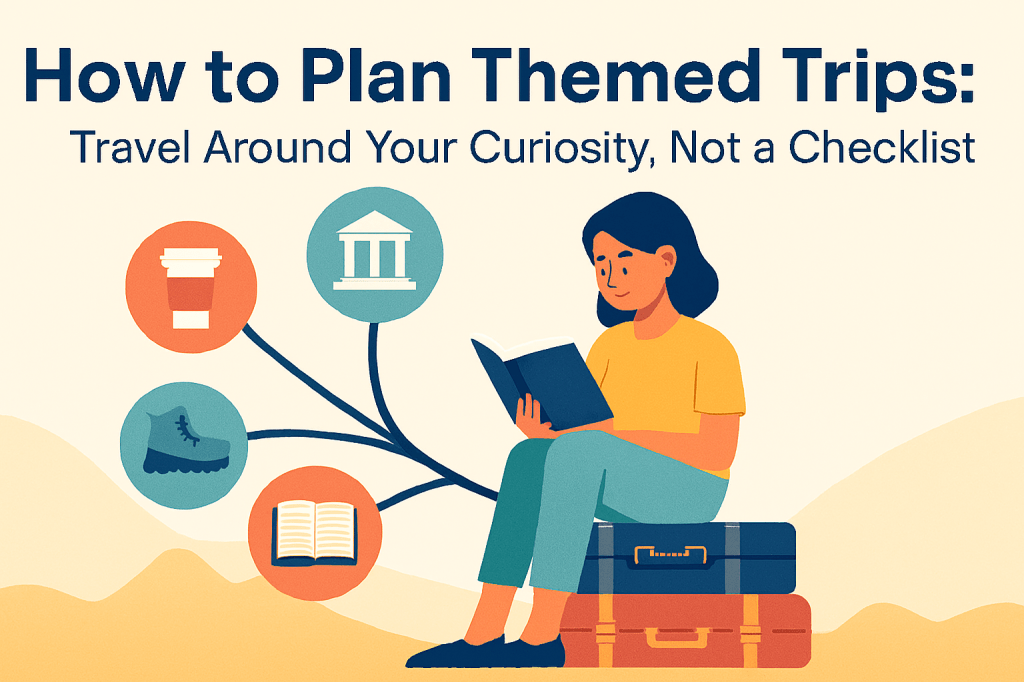
🧭 Step 1: Choose a Curiosity, Not a Destination
Forget about countries and capital cities for a moment.
Start with something that truly fascinates you. It could be:
- A craft: pottery, woodworking, coffee roasting, bread baking
- A theme: mindfulness, architecture, sustainability, slow living
- A habit: morning routines, walking culture, local markets
- A historical period or figure: something you’ve always wanted to explore
Once you know your curiosity, find where in the world it lives. You’ll often discover unexpected destinations — smaller towns, local communities, or regions where your theme naturally thrives.
✨ Example: Instead of “I want to visit Italy,” try “I want to learn how Italians approach food and community.” That curiosity leads you to Bologna’s kitchens and farmers’ markets — not just photos at the Colosseum.
📖 Step 2: Research Through Stories, Not Lists
Traditional trip planning leans on “Top 10 things to do in…” lists.
But those rarely tell you what makes a place unique.
Try this approach instead:
- Read memoirs, travel essays, and local blogs around your theme.
- Watch YouTube documentaries or interviews with locals or experts.
- Join online communities that share your interest (Reddit, Facebook groups, Substack newsletters).
You’re not collecting destinations — you’re gathering stories and context. You’ll arrive informed, curious, and more connected.
🧩 Step 3: Build a Flexible Framework
Themed trips work best when they’re structured loosely — more like a rhythm than a schedule.
Create a simple framework:
- Anchor experiences: 1–2 core activities tied to your theme.
- Daily rhythm: Mornings for exploration, afternoons for reflection or journaling.
- Rest days: Leave intentional gaps for serendipity — often where the best stories happen.
Think of your itinerary like jazz: a clear melody with room for improvisation.
☕ Step 4: Let Serendipity Do Its Work
Once you arrive, stay curious and approachable.
Ask locals about your theme. Visit niche spaces — small museums, co-working hubs, independent bookstores, or local workshops.
Sometimes the most memorable experiences are unplanned:
a chat with a ceramic artist, a local market detour, or an invitation to a family meal.
🗣️ The goal isn’t to see everything — it’s to feel connected to something.
✍️ Step 5: Reflect, Don’t Just Record
Instead of logging miles, document insights.
Ask yourself:
- What did this theme teach me about the culture — or about myself?
- Did it change how I view daily habits back home?
- How did slowing down shape my experience?
Your themed travel notes often reveal patterns you wouldn’t notice otherwise. They become less of a diary — and more of a mirror.
🌍 Example Themes to Inspire You
Here are some creative ways to design your next trip around curiosity:
- ☕ The Coffee Trail: From Ethiopian ceremonies to Colombian fincas
- 🏛️ The Architecture Journey: Design walks through Kyoto, Prague, and Mexico City
- 🚶♀️ The Walking Trip: Cities that celebrate pedestrians (Lisbon, Tokyo, Edinburgh)
- 📚 The Reading Retreat: Living in literary cities like Buenos Aires or Dublin
- 🧘♀️ The Wellness Quest: Exploring ancient healing traditions in Southeast Asia
Each theme becomes a lens — a way to see culture, people, and yourself more clearly.
✈️ Final Thoughts: The Freedom of Themed Travel
When you stop traveling to collect places and start traveling to connect ideas, something shifts. Your trips begin to mirror your evolving interests — they become part of your personal growth, not a break from it.
So next time you plan a getaway, skip the bucket list.
Ask yourself:
“What am I curious about right now?”
That’s your next destination.
 VD
VD 
Leave a reply to How to Make Friends While Traveling Solo: A Guide to Finding Community – VD Cancel reply