🧘♂️ The Paradox of the Modern Desk Athlete
Athletes train hard — but they recover harder.
Meanwhile, many of us push through eight-hour sitting marathons and call that “rest.”
The truth?
If you work at a desk, your body faces its own version of athletic stress — prolonged stillness, screen fatigue, and mental strain.
Just like an athlete, you need a recovery routine to perform well, stay healthy, and avoid burnout. The difference is that your arena isn’t a stadium — it’s your workspace.
This post will show you how to recover like an athlete, even if your toughest competition is your inbox.
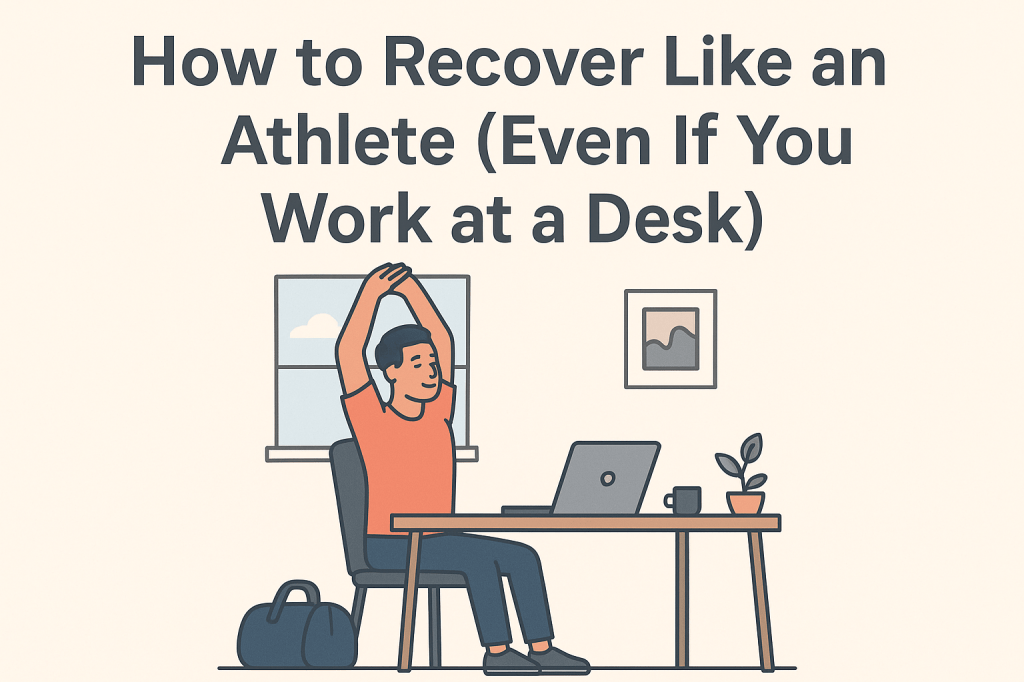
🧩 Step 1: Redefine What “Recovery” Means
For athletes, recovery isn’t about doing nothing — it’s about doing what restores function.
The same applies to desk workers.
You don’t need ice baths or protein shakes.
You need to rebalance the systems that desk work drains:
- Muscles (stiffness and posture)
- Mind (focus fatigue)
- Metabolism (slow energy turnover)
- Mood (stress overload)
Recovery, in this sense, is the act of returning your body and mind to ready mode — flexible, alert, and calm.
🏃♂️ Step 2: Think in Micro-Recoveries
Athletes don’t wait until burnout to rest. They build recovery into their routine — between sets, practices, and games.
You can do the same through movement snacks — small, frequent resets throughout your day.
Try this rhythm:
- Every 30 minutes: Stand and stretch for 30–60 seconds.
- Every 90 minutes: Walk, breathe, or do light mobility for 3–5 minutes.
- Once per day: Move enough to elevate your heart rate for 20 minutes (walk, jog, dance, yoga).
Even two minutes of movement every half hour dramatically improves blood flow, focus, and energy.
🧠 Tip: Use existing cues — coffee refills, calls, or emails — as your “movement reminders.”
This is active recovery for your workday.
🪑 Step 3: Optimize Your Posture — Not Just Your Chair
You can’t “ergonomically” your way out of poor movement habits.
A $1,000 chair won’t help if you’re slouching, crossing legs, or collapsing your core for eight hours straight.
Instead of fixating on perfect posture, aim for postural variety — the constant shifting that keeps circulation alive.
Try these athlete-inspired posture resets:
- Thoracic extension: Interlace fingers behind your head and gently open your chest for 10 seconds.
- Hip opener: Place one ankle over the opposite knee while seated and lean forward gently.
- Shoulder mobility: Roll shoulders in slow circles backward and downward.
These aren’t workouts — they’re recalibrations. Think of them as your body’s “maintenance stretches.”
🌿 Step 4: Use Recovery’s Silent Pillars — Sleep and Hydration
No amount of stretching can replace sleep or hydration.
These two simple habits drive 80% of physical and cognitive recovery.
Sleep Like You Train
Athletes track their sleep as carefully as their workouts. You can too.
Aim for:
- 7–9 hours nightly
- Consistent bedtime (within 30 minutes daily)
- No caffeine after 2 PM
- Screen dimming or blue-light filters after sunset
Sleep is where your body repairs tissues, clears brain waste, and consolidates memory — the real recovery workout.
Hydrate for Energy, Not Just Thirst
Dehydration mimics fatigue, anxiety, and brain fog.
If you’re tired mid-afternoon, try water before coffee.
A general rule: half your body weight (in pounds) = ounces of water daily.
🧠 Pro tip: Athletes pre-hydrate. You can too — start your day with a full glass before opening your laptop.
🧘 Step 5: Regulate Stress Like a Pro
Athletes use breathing and mindfulness to stay calm under pressure — essential skills for mental recovery.
Your work stress may not involve scoreboards, but your body reacts the same way.
Try this 60-second recovery protocol between tasks or meetings:
- Sit tall, relax your jaw and shoulders.
- Inhale through your nose for 4 seconds.
- Hold for 2 seconds.
- Exhale slowly for 6 seconds.
Do three rounds. This rebalances your nervous system and clears “mental lactic acid.”
If you prefer structure, explore box breathing (4-4-4-4) or short yoga nidra sessions — both proven to reduce stress and boost clarity.
🧍 Step 6: Recover Through Movement, Not From It
Recovery doesn’t mean rest days on the couch.
It means choosing movements that restore, not deplete.
Here are three recovery modes anyone can adopt:
1. Active Mobility (5–10 min/day)
Gentle stretches for your hips, shoulders, and spine. Think yoga flows, foam rolling, or dynamic stretches.
2. Zone 2 Cardio (2–3 times/week)
Easy, conversational exercise like brisk walking, cycling, or hiking. Boosts mitochondrial health and mental recovery.
3. Strength for Posture (2 times/week)
Train your “desk-antagonist” muscles — glutes, upper back, and core — to offset sitting fatigue.
You don’t have to be an athlete to train like one. You just have to move intelligently.
🧠 Step 7: Recover Your Attention, Too
Physical recovery is only half the story.
Mental recovery — focus, creativity, motivation — follows similar rules.
Athletes call it mental reset. You can, too.
Try these desk-friendly “attention resets”:
- Pomodoro recovery: After 50 minutes of work, take 5 minutes to walk, breathe, or stretch your eyes by looking at something far away.
- Digital cooldown: Avoid phone use for the first and last 30 minutes of your day.
- Weekend deload: One day without screens or notifications — a “digital sabbatical.”
Your brain, like your body, performs best in cycles of stress and recovery.
🧩 Step 8: Create Your Personalized Recovery Loop
Combine these into your own “Desk Athlete Recovery Plan”:
| Recovery Pillar | Daily Habit | Why It Works |
|---|---|---|
| Movement Snacks | 2 min/hour | Boosts blood flow, lowers stiffness |
| Postural Resets | 3x/day | Keeps spine and shoulders mobile |
| Hydration | 8–10 cups/day | Improves energy, focus, and digestion |
| Sleep | 7–9 hrs/night | Deep recovery for brain and body |
| Breathing Breaks | 2x/day | Lowers stress, restores focus |
| Active Mobility | 10 min/day | Reduces pain, improves flexibility |
The key is consistency, not intensity.
Athletes recover daily. You should, too.
💬 Closing Thought: Treat Your Work Like a Sport
The difference between burnout and performance isn’t effort — it’s recovery.
You might not sprint or lift weights for a living, but your body and mind still carry workloads, repetitions, and stress cycles.
So train like an athlete of attention.
Recover like one, too.
Because peak performance doesn’t come from working harder — it comes from learning when, and how, to rest.
 VD
VD 
Leave a reply to How to Recover from Burnout and Rebuild Your Energy After a Long Stint at Work – VD Cancel reply