We live in an age where every idea comes with a recommended app.
If you want to remember more, there’s an app for that. If you want to take notes, organize your thoughts, or “build a second brain,” there are dozens.
But what if the most powerful knowledge system you could ever build didn’t require another tool, subscription, or productivity framework?
What if you could build a second brain simply through the way you read?
This post is about using books — not apps — to build a lifelong system for thinking, remembering, and creating.
🧠 What Is a “Second Brain,” Really?
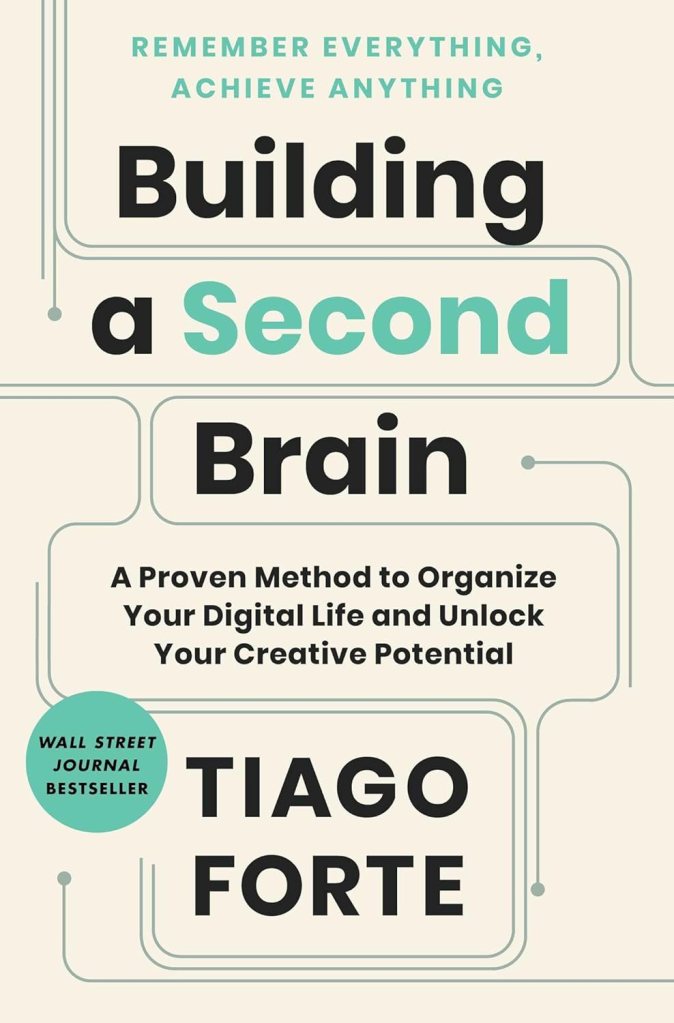
The phrase “Second Brain” was popularized by Tiago Forte to describe a system for capturing and connecting ideas outside your head. The concept took off because we’re all overwhelmed by information — notes, articles, podcasts, tweets — and we need somewhere to store it all.
Most people turn to digital tools like Notion, Evernote, or Obsidian. These are powerful, but they can also create what I call organized overwhelm — a beautifully structured mess of unprocessed ideas.
At its core, a second brain isn’t about storage. It’s about synthesis.
It’s about understanding ideas deeply enough that they become part of your mental framework — so you can use them naturally in decisions, conversations, and creative work.
And one of the best ways to do that? Reading intentionally.
📚 Step 1: Read With Intent, Not Just Interest
The average person reads reactively — a tweet recommends a book, someone posts a highlight, and we add it to our endless “to-read” list. We collect titles the way others collect apps.
But to make reading part of your second brain, you need to read with purpose.
Before opening a book, pause and ask:
- Why this book, right now?
- What am I hoping to understand or solve?
- How does this connect to something I’m already curious about?
These questions turn your reading from passive consumption into active exploration. When you read with a question in mind, your brain automatically starts connecting ideas across different topics. Those connections — not the notes or highlights — are what make knowledge stick.
✍️ Step 2: Capture Connections, Not Quotes
Highlighting feels productive but rarely is. A highlighted book is like a gym membership — potential without practice.
To transform reading into understanding, focus less on what the author said and more on why it matters to you.
After each chapter or reading session, write down:
- The one idea that stood out most.
- Why it resonated with you.
- Where it connects to something you already know or do.
That’s it. No complex note-taking system, no color codes. Just a short reflection that links the author’s insight to your own thinking.
For example:
“The author says wealth equals control over time — reminds me of FIRE and autonomy. I could write about how time, not money, is the true measure of independence.”
In that one sentence, you’ve turned a passive highlight into an active idea. Over time, these reflections become the neural threads of your analog second brain.
🔁 Step 3: Revisit and Reread
Most of us treat books like one-time experiences — finish, shelve, move on. But real understanding comes from revisiting.
When you reread a book months or years later, you’re not the same person encountering the same text. You bring new experiences, problems, and perspectives. That’s what makes rereading so powerful — it becomes a dialogue between your past and present selves.
Instead of constantly chasing new titles, return to the ones that shaped you. Each reread reinforces ideas, strengthens memory, and deepens meaning. Think of it as compounding intellectual interest — every reread multiplies your understanding.
Related reading: Learning in Layers: Why Rereading Books Unlocks Deeper Insights
🧩 Step 4: Build a Web of Ideas
A true second brain isn’t a linear list of notes — it’s a network of insights that talk to each other.
You can build this without a single digital tool.
Here’s how:
- Keep one dedicated notebook (or a single doc if you prefer digital minimalism).
- Write brief reflections after finishing each book.
- Use symbols or emojis to group related themes:
💰 for money and FIRE, 🧠 for learning, 🌍 for travel, 🏃♂️ for health, 💬 for mindset. - When you notice patterns — like how lessons from a travel book echo those from a finance book — draw lines or arrows connecting them.
This process isn’t about archiving information. It’s about mapping your mind — building a living web of knowledge that grows with you.
🌿 Step 5: Apply and Teach
A second brain isn’t a library; it’s a laboratory.
Knowledge compounds only when you use it.
Every week, choose one small idea from your notes or reflections and apply it:
- Try a new health habit you read about.
- Adjust your spending mindset based on a finance book.
- Write a blog post connecting two books’ ideas.
Teaching, especially through writing, is the most powerful way to test your understanding. It forces clarity. If you can explain an idea simply, you truly understand it.
That’s why writing regularly — whether in a journal, a blog, or social posts — is the natural extension of your reading habit. Reading fills the well; writing draws from it.
🪶 Step 6: Keep It Low-Tech and Human
Building your second brain through reading has a hidden advantage: it keeps you close to your thoughts.
When you handwrite reflections or reread physical books, you engage more deeply. You’re not clicking between tabs or tweaking templates — you’re thinking. That’s the difference between collecting ideas and cultivating them.
A low-tech system offers:
- Fewer distractions, more focus.
- Deeper memory through handwriting and reflection.
- A personal archive that feels intimate, not industrial.
It’s not about rejecting technology; it’s about protecting your attention. The best system is the one you actually use — consistently and calmly.
💡 The Simplicity Advantage
When you build your second brain through reading, you’re not outsourcing memory — you’re strengthening it.
You begin to notice recurring themes across books, connect seemingly unrelated ideas, and make better decisions because your thinking is organized naturally, not artificially.
You don’t need Notion. You need noticing.
You don’t need more notes. You need more reflection.
Your mind is already capable of remarkable pattern recognition. Reading with intention simply gives it better raw material.
🔁 Closing Thought
Your brain doesn’t need an upgrade — it needs space.
It needs quiet moments to connect ideas, time to reread, and the discipline to think on paper.
Every page you read with intention is a new neural pathway forming — a thread in the web of your second brain. Over time, this becomes your greatest asset: a personalized knowledge system built entirely from curiosity, reflection, and lived experience.
No app can replicate that.
So next time you pick up a book, don’t just read it — build with it.
Because every insight you integrate becomes another brick in the architecture of your second brain.


Leave a comment