Burnout is not just a fleeting sense of exhaustion or the typical tiredness that comes with a busy schedule. It’s a state of mental, physical, and emotional depletion that builds up over time and can deeply affect your productivity, creativity, and overall well-being. If you’ve been working at a high intensity for an extended period, feeling drained and detached from both your work and personal life, chances are you’re experiencing burnout. The good news is that burnout is not a permanent condition, and recovery is possible.
In this guide, we’ll explore actionable steps to help you rebuild your energy, restore your balance, and regain a sense of well-being after a prolonged period of overwork. Recovery from burnout requires patience, self-compassion, and practical strategies to regain control of your mental and physical health. Let’s dive in.
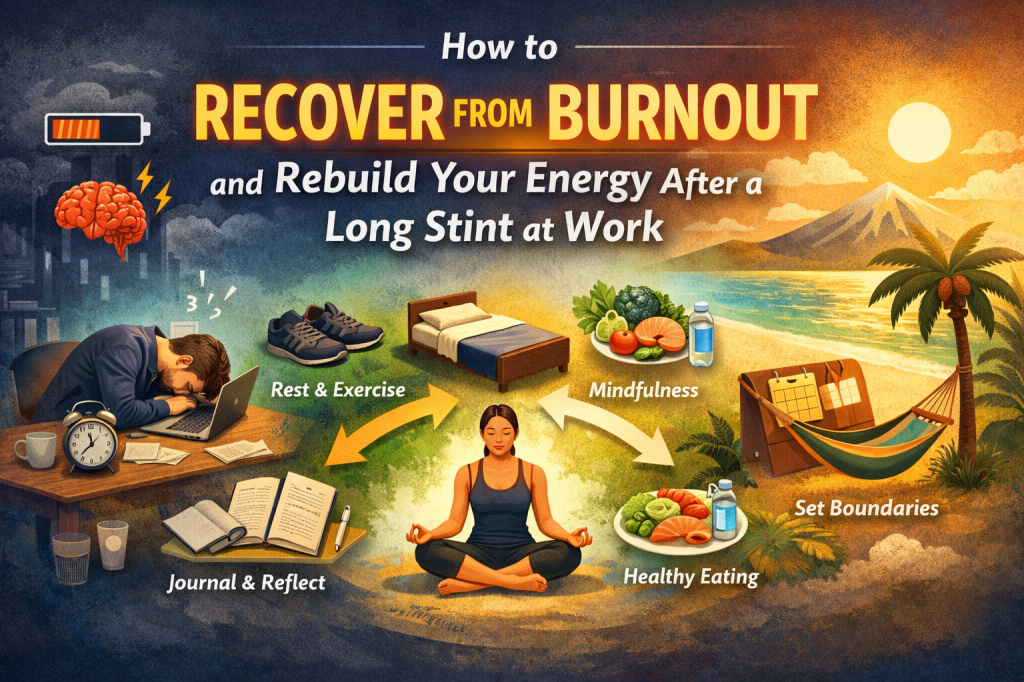
Understanding Burnout: More Than Just Being Tired
Burnout doesn’t happen overnight. It’s a gradual process that can sneak up on you. It typically results from prolonged stress at work—especially when you’re feeling overburdened, unappreciated, or disconnected from the purpose behind your work. Burnout often leaves you feeling drained, both physically and emotionally, with a lack of motivation or enthusiasm for tasks that once excited you.
Key symptoms of burnout may include:
- Physical exhaustion that doesn’t improve even after a good night’s sleep.
- Cynicism or detachment from your work and colleagues.
- Reduced performance or a sense of ineffectiveness.
- Chronic stress that leads to headaches, digestive problems, sleep disturbances, and other physical ailments.
- Emotional numbness or withdrawal from social interactions and responsibilities.
It’s important to recognize these signs early. The sooner you address burnout, the quicker and more effectively you can recover. By doing so, you can regain control over your energy, mental clarity, and ultimately, your overall health.
1. Acknowledge Burnout and Give Yourself Permission to Rest
The first step in recovering from burnout is to acknowledge it. Many people push themselves through burnout, thinking it’s a phase or that they can “tough it out.” However, recovery cannot begin without recognizing that burnout is real, and your body and mind need rest.
- Take a break: If possible, take time off from work. A few days away will give you the physical and mental space to start healing. If you can’t take a long break, even a few hours of downtime each day can help recharge your energy.
- Let go of guilt: Rest is not a luxury—it’s a necessity for recovery. If you feel guilty for stepping away from work, remind yourself that you’re taking this time to restore your ability to be more effective and present when you return.
- Set boundaries: While recovering, set strict boundaries with your work and personal commitments. Refrain from checking emails or overextending yourself socially. This is your time to restore, not to continue “getting things done.”
Pro Tip: Create a restoration checklist of calming activities that help you unwind, such as a short walk, journaling, or reading a book. By making these activities a regular part of your recovery routine, you’ll start to reclaim your energy.
2. Prioritize Sleep and Rebuild Your Sleep Hygiene
Sleep is one of the most important components of recovery. When you’re burned out, your body’s natural rhythms are disrupted, leading to poor sleep quality, difficulty falling asleep, or waking up feeling unrested. Rebuilding your energy starts with re-establishing a healthy sleep routine.
- Create a sleep-friendly environment: Make your bedroom a sanctuary. Keep it cool, dark, and quiet, and remove distractions like smartphones and laptops. This will signal your brain that it’s time to rest.
- Establish a bedtime routine: Consistency is key. Try to go to bed and wake up at the same time each day. Create a calming pre-sleep routine—dim the lights, take a warm bath, read a book, or practice deep breathing.
- Monitor your sleep patterns: Use a sleep-tracking app to gain insights into your sleep quality and habits. Aim for 7-9 hours of sleep each night to support your body’s recovery process.
Pro Tip: Try deep breathing exercises to calm your mind before bed. For example, inhale deeply for four counts, hold for four counts, and exhale for four counts. This simple breathing technique can reduce stress and promote relaxation.
3. Rebalance Your Physical Energy with Gentle Exercise
It might seem counterintuitive to think about exercise when you’re already exhausted, but movement is a key part of the recovery process. Rather than jumping into intense workouts, focus on gentle, restorative movement that helps rebuild your energy.
- Walking: A simple walk outdoors can do wonders for your energy levels. Aim for at least 30 minutes a day to get your blood flowing and reduce feelings of stagnation or burnout.
- Yoga or Stretching: Yoga helps release physical tension that accumulates from stress and long hours at the desk. Incorporate restorative yoga poses and deep stretching into your daily routine to alleviate muscular tightness.
- Strength Training: Once you’ve regained some energy, consider incorporating light strength training exercises into your schedule. Resistance training improves both physical and mental resilience.
Pro Tip: Take movement snacks throughout the day. Short bursts of movement—such as a 5-minute walk or a 10-minute stretch—can help reduce stress and improve your focus without overburdening your body.
4. Recalibrate Your Mental Energy: Practice Mindfulness
Burnout can leave you feeling mentally scattered and disconnected from your own thoughts. To rebuild your mental energy, practice mindfulness to quiet your mind, reduce anxiety, and foster clarity.
- Meditation: Start with just five minutes of guided meditation each day. Apps like Headspace, Calm, or Insight Timer offer quick sessions designed to reduce stress and improve focus.
- Mindful breaks: Throughout the day, take small breaks to check in with yourself. Close your eyes, focus on your breath, and take a few moments to tune out the noise.
- Journaling: Writing down your thoughts, feelings, and goals can help release pent-up stress and clarify what’s truly important to you. Journaling is a great tool for reconnecting with yourself.
Pro Tip: Try the 5-4-3-2-1 grounding exercise when you feel overwhelmed. Focus on five things you can see, four things you can touch, three things you can hear, two things you can smell, and one thing you can taste. This exercise helps center your mind and brings you back to the present moment.
5. Nourish Your Body with Healthy Food Choices
When you’re burned out, your diet often takes a backseat. However, nourishing your body with the right foods can help replenish your energy reserves and speed up the recovery process.
- Eat nutrient-dense meals: Prioritize whole foods, including fruits, vegetables, lean proteins, and healthy fats. Minimize processed foods, sugars, and caffeine, which can cause energy crashes and mood swings.
- Stay hydrated: Dehydration can exacerbate fatigue, so make sure you’re drinking plenty of water throughout the day.
- Supplements: If you’re deficient in essential nutrients, such as magnesium or vitamin D, consult your doctor to explore supplement options that can support your recovery.
Pro Tip: Start your day with a nourishing breakfast that includes protein, fiber, and healthy fats. This will help stabilize your blood sugar and sustain your energy throughout the morning.
6. Set New Boundaries and Reclaim Your Time
One of the key causes of burnout is overcommitment—whether it’s at work or in your personal life. Once you’ve regained some of your energy, it’s time to reassess your boundaries and make intentional changes to your schedule.
- Learn to say no: Practice saying no to additional projects, social obligations, or responsibilities that drain your energy.
- Reevaluate your work commitments: After burnout, it’s crucial to rethink your workload. Break tasks into smaller chunks, delegate when possible, and set realistic expectations for yourself.
- Create more space for rest: Schedule regular breaks throughout your day, and dedicate time for activities that recharge you—whether that’s spending time with loved ones, pursuing hobbies, or simply resting.
Pro Tip: Use time blocking to organize your day. Block out specific hours for work, rest, exercise, and personal activities, and avoid letting work spill into your personal time.
Conclusion: From Burnout to Balance
Recovering from burnout is a gradual process. It requires both physical and mental effort, but it is entirely possible with the right strategies and mindset. By focusing on rest, nourishing your body, practicing mindfulness, and setting boundaries, you can restore your energy and find balance in your life again.
Remember, burnout is not a permanent state. With the right tools and support, you’ll emerge from this phase stronger, more resilient, and with a clearer sense of purpose.
Related Reading:
If you found this post helpful, you may enjoy these related articles on burnout, balance, and recovery:
- Training Your Nervous System for Modern Work: How to Reduce Stress and Avoid Burnout
- The Cost of Being “On” All Day: How Modern Work Overloads Your Nervous System
- Energy Management vs Time Management: How to Increase Focus, Productivity, and Avoid Burnout
- Why Financial Independence Is Really About Slack (Not Early Retirement)
- How Desk Work Affects Your Nervous System: The Physical Cost of Focus
- The Hidden Injuries of Sitting All Day (and How to Fix Them Early)
- How to Improve Focus Before Deep Work: Simple Mental Warm-Up Rituals
- How to Recover Like an Athlete (Even If You Work at a Desk)
 VD
VD 
Leave a reply to How to Improve Mental Clarity and Make Better Decisions: Simplify Your Mind – VD Cancel reply