The concept of becoming a digital nomad is more attainable than ever. Thanks to the rise of remote work, millions of people are now living their dream of working from anywhere—whether that’s a beach in Bali, a cozy café in Prague, or a remote mountain village. However, the true magic lies not just in the location independence, but in how you choose to structure your work and life.
As a digital nomad, you can work wherever you want—but should you work all the time? Enter the 4-day workweek, a trend that has gained significant traction in recent years. The idea of working fewer days while maintaining or even increasing productivity seems too good to be true, but it’s not. A well-implemented 4-day workweek can enhance focus, boost creativity, and give you more time to enjoy life while still getting the job done.
In this guide, we’ll explore why a 4-day workweek is an excellent fit for digital nomads, how to implement it effectively, and actionable strategies for staying productive and achieving more in less time.
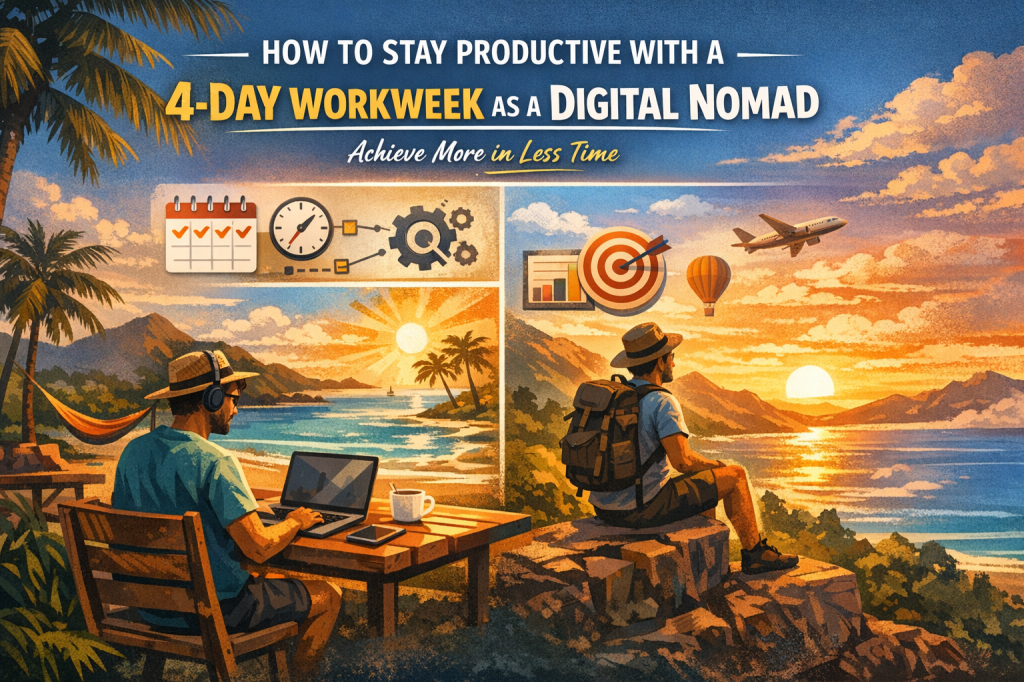
Why a 4-Day Workweek Works for Digital Nomads
1. Improved Focus and Productivity
The idea of cutting down your workweek might seem counterintuitive. After all, if you’re working fewer hours, how can you possibly be more productive? The key lies in how your brain functions and the way work is structured.
When you work fewer days, your brain is forced to focus intensely during the hours you are working. Studies suggest that the brain’s cognitive performance peaks during shorter, high-focus periods, and declines over time during longer work hours. By having just four days of work each week, you avoid the feeling of burnout that typically comes with longer, stretched-out schedules.
Many successful digital nomads report that the 4-day workweek boosts their creativity and allows them to produce more in less time. You get more done in fewer hours because you’re focused on key tasks, without the distractions and fatigue that often accompany the traditional five-day workweek.
2. More Time for Travel and Personal Growth
As a digital nomad, one of the biggest appeals is the ability to balance work with exploration. You don’t just want to be a tourist in a new place; you want to experience it, immerse yourself in the culture, and expand your horizons. A 4-day workweek gives you that extra time to focus on what matters most: living fully.
With a 3-day weekend, you can plan longer trips, deep dive into local cultures, or simply enjoy more downtime. This added flexibility leads to personal growth, as you have the time to reflect, learn, and develop new skills beyond just work. It also ensures that the burnout often associated with traveling while working is minimized.
For instance, you could spend your extra day traveling to a nearby city, hiking in the mountains, or indulging in a hobby you’ve been meaning to pick up. In a traditional 5-day workweek, these opportunities might be reserved for a once-in-a-while vacation, but the 4-day workweek makes it a part of your regular routine.
3. Increased Motivation and Work-Life Balance
The promise of a longer weekend every week can serve as a powerful motivator. Knowing that you only have four days to accomplish your work encourages you to focus more effectively on the tasks that truly matter. You’re less likely to procrastinate and more likely to prioritize work that contributes directly to your goals.
A 4-day workweek also improves work-life balance—a key factor for maintaining happiness and avoiding burnout. Since you’re not working every single day, you have a buffer to recharge, spend time with loved ones, or explore personal interests.
More time off means more opportunities to rest and rejuvenate, which directly impacts your overall productivity and mental clarity. Ultimately, the balance you gain from this structure makes you a better, more efficient digital nomad.
How to Implement a 4-Day Workweek as a Digital Nomad
Shifting to a 4-day workweek isn’t just about working fewer hours—it’s about making your time more intentional and productive. Here’s how to implement a 4-day workweek in a way that helps you stay productive without sacrificing your lifestyle.
1. Plan Ahead: Optimize Your Workflow
Before you make the leap to a 4-day workweek, take a critical look at your current work schedule. Are there tasks you’re doing that can be eliminated or delegated? Which tasks are high-priority and which can be left for later? Streamlining your workflow is essential to maximizing the effectiveness of your new schedule.
You might also want to adopt productivity systems like time-blocking, Pomodoro technique, or even use task management tools like Trello or Asana to stay on track. These tools can help you create clear, actionable steps for each day you work, ensuring you’re always focused and on target.
2. Set Clear Goals and Milestones
A 4-day workweek requires a results-oriented approach. One of the best ways to stay productive is by setting clear, measurable goals for yourself. Whether it’s hitting a certain revenue target, completing specific client tasks, or writing a certain number of blog posts, breaking down your larger goals into weekly or daily tasks can help you stay focused.
Setting milestones and deadlines will give you something concrete to work toward and keep you motivated. Be realistic with your goals—while it’s tempting to tackle everything at once, prioritizing high-impact tasks will yield the best results.
3. Communicate Expectations with Clients and Colleagues
If you have clients or team members, it’s crucial to communicate your new schedule to them. Be transparent about the changes, explaining that while you’ll be working fewer days, your output will remain consistent or even improve.
This communication will help set the right expectations about availability and response times, ensuring that everyone is on the same page. Let them know that you’ll be reachable within your work hours, but also take the time to outline any potential delays.
4. Leverage Automation and Productivity Tools
One of the best ways to increase productivity with fewer workdays is by automating repetitive tasks. Tools like Zapier and Buffer can help automate your social media posts, client communications, or invoicing. By freeing up time spent on administrative work, you can focus on what matters most: your core business activities.
Also, utilize cloud storage and collaborative tools like Google Workspace, Slack, and Zoom to stay connected, organized, and productive no matter where you are.
5. Protect Your “Off” Time
Your 3-day weekend is a precious commodity. While it’s tempting to keep checking emails or taking client calls during this time, setting clear boundaries around your off days is essential for mental recharge. Use your extra day to focus on rest, recreation, and personal growth activities.
It’s important to allow yourself the freedom to fully disconnect, which in turn will make you more productive during the four days you are working. Whether you decide to explore a new destination or engage in self-care, make sure your off time is truly yours.
Tips for Staying Productive During Your 4-Day Workweek
1. Prioritize Your Work
When you only have four days to accomplish your tasks, prioritization becomes even more important. Start each day by identifying your top three to five most important tasks and tackle those first. The key is to make sure you’re spending your time on high-leverage activities.
2. Eliminate Distractions
Distractions are a productivity killer, especially when you’re working remotely. To stay productive, create an optimal workspace and eliminate anything that might disrupt your flow. Consider using apps like StayFocusd or Freedom to block distracting websites during your work hours.
3. Take Strategic Breaks
Taking regular breaks is key to maintaining focus and avoiding burnout. Using techniques like the Pomodoro method—work for 25 minutes, followed by a 5-minute break—can help you sustain your energy throughout the day.
4. Embrace Flexibility
One of the greatest benefits of a 4-day workweek is flexibility. If you’re feeling unproductive on a given day, don’t be afraid to adjust your schedule. Whether it’s shifting tasks around or taking a mental health day, the ability to adapt will keep you from feeling trapped in a rigid system.
Conclusion: Achieve More with a 4-Day Workweek
A 4-day workweek offers digital nomads the perfect balance between productivity and freedom. By working smarter, not harder, you can maintain a high level of output while enjoying the lifestyle you’ve worked hard to create. Whether you’re looking to maximize your time, avoid burnout, or simply enjoy more freedom, adopting a 4-day workweek can transform the way you work and live.
If you’re ready to take the leap, remember that the transition to a 4-day workweek requires planning, communication, and prioritization. With the right strategies in place, you’ll be able to achieve more in less time, all while enjoying the benefits of a location-independent lifestyle.
Related Reading:
- How to Build a Consistent Reading Habit That Lasts for Personal Growth
- The Boring Middle of FIRE: How to Stay Consistent While Compounding Works
- How to Optimize Your Nervous System for Better Focus, Performance, and Health
- Why Financial Independence Is Really About Slack (Not Early Retirement)
- How to Leverage Time for Financial Freedom: Time Management Strategies for Wealth
- How to Build a Second Brain with What You Read (No Apps Needed
- How to Turn Travel Into a Full-Time Career as a Digital Nomad (While Keeping Your Freedom)
These related blogs dive deeper into productivity, financial independence, and how to maintain focus and work-life balance as a digital nomad. Enjoy reading!
 VD
VD 
Leave a reply to How to Build Healthy Eating Habits That Last (Without the Overwhelm) – VD Cancel reply