Traveling full-time sounds like a dream — endless freedom, new cultures, and constant adventure. But after several years on the road, I’ve watched many digital nomads and long-term travelers slowly transform into what I call “professional tourists”. They’re always moving, always chasing the next highlight, yet they feel increasingly exhausted, disconnected, and unfulfilled.
The difference between thriving while traveling full-time and quietly burning out often comes down to one key distinction: whether you’re truly living in places or simply visiting them at high speed.
In this comprehensive guide, I’ll share the systems, mindsets, and practical strategies I’ve developed to travel full-time for years without falling into the professional tourist trap. You’ll learn how to design a sustainable long-term travel lifestyle that supports deep experiences, strong health, meaningful connections, and personal growth — instead of endless checklists and burnout.
Whether you’re planning your first full-time travel journey or you’ve been on the road for a while and feel the warning signs of exhaustion, this article will help you travel better, deeper, and more sustainably.
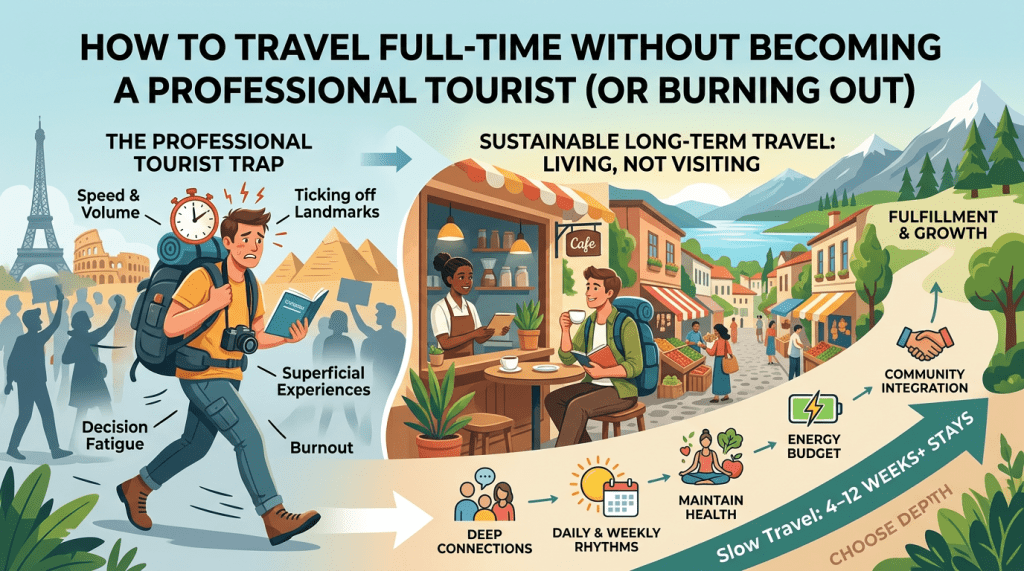
The Professional Tourist Trap: Why So Many Full-Time Travelers Burn Out
The professional tourist treats travel like a full-time job of consumption. Every day becomes another mission to “do” a city: ticking off landmarks, hunting the perfect Instagram shot, and moving on before they’ve even unpacked properly.
Common symptoms include:
- Decision fatigue from constant planning
- Physical and mental burnout
- Superficial understanding of places and cultures
- Growing sense of rootlessness and loneliness
- Declining health and energy levels
The solution is to shift from fast travel to slow, intentional travel — a philosophy that prioritizes living like a local over collecting passport stamps.
Why Slow Travel Is Essential for Sustainable Full-Time Travel
Slow travel is the foundation of any successful long-term travel lifestyle. Instead of spending 3–7 days in each place, aim for 4–12 weeks (or longer).
When you stay longer in one location:
- You move past the tourist highlights and discover the real rhythm of daily life
- Your nervous system has time to relax and adapt
- You build authentic relationships instead of transactional encounters
- You experience genuine personal growth through immersion
- You avoid the constant stress of packing, planning, and logistics
Research and real-world experience both show that it typically takes 3–4 weeks for a new place to stop feeling like “travel” and start feeling like “life.” This is where the magic happens.
For full-time travelers, I recommend a “travel in chapters” approach: plan your year around 4–6 locations instead of 20–30. This dramatically reduces burnout while increasing fulfillment.
How to Choose the Right Destinations for Full-Time Travel
Not every beautiful place works well for long-term stays. When selecting locations for extended travel, evaluate them against these criteria:
- Energy alignment — Does the city recharge or drain you?
- Cost of living — Can you live comfortably without financial stress?
- Infrastructure — Reliable internet, good healthcare access, walkability
- Community potential — Are there opportunities to meet locals and other long-stayers?
- Nature and movement access — Parks, trails, gyms, or beaches nearby
- Visa practicality — How easy is it to stay 60–90+ days?
I maintain a personal spreadsheet with a “Recharge Score” for every place I’ve visited. Before committing to 2+ months somewhere, I always do a 7–10 day scouting trip first. This simple practice has saved me from several expensive mistakes.
Popular long-term travel destinations that consistently score high include Portugal (Lisbon, Porto, Madeira), Mexico (Oaxaca, Mérida), Georgia (Tbilisi), Indonesia (Bali, Lombok), and parts of Thailand and Vietnam — but the “best” place ultimately depends on your personality and season of life.
Designing Your Daily and Weekly Rhythm on the Road
One of the biggest secrets to avoiding burnout while traveling full-time is creating consistent daily and weekly rhythms that feel like real life — not perpetual vacation.
Here’s my proven framework:
Daily Structure:
- Morning: Movement + mindfulness (run, yoga, walk, journaling)
- Deep work block (if you work remotely)
- Afternoon: Local integration (markets, language class, volunteering, exploring slowly)
- Evening: Reflection, light reading, early wind-down
Weekly Anchors:
- One full “zero-plan” day for recovery
- One deep nature day (hike, beach, mountains)
- One social commitment (class, dinner with friends, local event)
- One admin day for planning and life maintenance
This structure gives you the benefits of freedom while protecting your energy and preventing the chaotic “always on” feeling that destroys many full-time travelers.
Building Real Connections Instead of Surface-Level Encounters
Professional tourists collect experiences. Deep travelers build relationships.
After years on the road, my richest memories come from people, not places. Here’s how to actually connect:
- Take classes (cooking, language, dance, art, climbing)
- Become a regular at local cafés, markets, or gyms
- Join or create small group activities (book clubs, hiking groups, running clubs)
- Volunteer or participate in community projects
- Host dinners or potlucks once you’re settled
The goal is to move from “traveler” to “temporary local.” This shift makes full-time travel exponentially more rewarding.
Maintaining Physical and Mental Health While Traveling Full-Time
Your body and mind are your most important assets when traveling full-time. Neglect them and the entire lifestyle collapses.
Physical Health Systems:
- Daily mobility and strength practice (even 15–20 minutes)
- Consistent sleep schedule (use blackout curtains and earplugs)
- Simple, whole-food eating based on local markets
- Weekly longer nature sessions
Mental & Emotional Health Systems:
- Regular digital detox periods
- Daily reflection practice (journaling)
- Strong boundaries around work vs exploration time
- Scheduled visits home or with loved ones
I also track my “Energy Budget” — making sure I don’t over-schedule exploration and leave enough recovery time between moves.
Creating a Sense of Home While Constantly Moving
The biggest psychological challenge of full-time travel is the feeling of rootlessness. To counter this:
- Carry a small “home ritual kit” (favorite mug, candle, photos, book)
- Maintain consistent morning and evening routines
- Keep the same digital workspace setup everywhere
- Build a small “chosen family” network across different locations
- Design travel in clear seasons and chapters
Many experienced full-time travelers eventually settle into a “home base + satellite” model — one primary location for 4–6 months and shorter trips from there.
Setting Boundaries and Planning Travel in Chapters
Sustainable full-time travel requires saying “no” to constant movement. I now follow these rules:
- Minimum stay: 6–8 weeks in most places
- Maximum consecutive travel days: 2–3 before needing a recovery stop
- At least one “still month” every 9–12 months
Treating your travel life in deliberate chapters (Spring in Portugal, Summer in the mountains, Winter in Southeast Asia) makes the lifestyle feel intentional rather than scattered.
The Essential Mindset Shift
The most important change is moving from a consumer mindset (“What can I see/do here?”) to a participant mindset (“How can I live here?”).
This single shift separates those who eventually burn out from those who can travel full-time for decades while becoming healthier, wiser, and more connected.
Practical Starter Framework for New Full-Time Travelers
If you’re just beginning:
- Start with 3–4 months in one country
- Choose 2–3 locations maximum for your first year
- Build your daily rhythm in the first two weeks of each stay
- Schedule recovery periods between moves
- Track your energy and happiness monthly
Conclusion
Traveling full-time can be one of the most rewarding ways to live — but only if you protect yourself from becoming a professional tourist. By embracing slow travel, building real connections, protecting your energy, and designing intentional systems, you can enjoy decades of rich, sustainable exploration.
The world is vast, but depth is rare. Choose depth.
FAQ – Full-Time Travel Without Burning Out
How long should I stay in one place when traveling full-time?
Most people need at least 6–8 weeks to move beyond tourist mode. Three months is the sweet spot where a place starts feeling like home.
What’s the best way to avoid travel burnout?
Slow down, reduce frequent moves, protect your mornings and evenings, and schedule regular recovery periods with very little planned activity.
Is full-time travel compatible with maintaining close relationships?
Yes — but it requires intention. Use regular video calls, plan visits home, and build a small global network of deep friendships.
How do you stay productive while traveling full-time?
Create consistent daily rhythms, use co-working spaces when needed, and protect deep work blocks in the morning.
What’s the ideal budget for sustainable full-time travel?
This varies widely by lifestyle, but many people thrive between $2,500–$4,500 per month depending on locations and comfort level.
Related Reading
If you enjoyed this guide, these articles explore related themes of intentional travel and location-independent living:
- How Long to Stay in One Place While Traveling: Why 3 Months Changes Everything
- Why Repeating Destinations Beats Chasing New Ones: The Case for Slow Travel
- Travel Stacking: How to Combine Learning, Fitness, and Reflection Into Every Trip
- Why Some Cities Recharge You (and Others Drain You)
- The Energy Budget of Travel: How to Avoid Travel Fatigue
- Comfort-Optimized Travel: Simple Systems That Reduce Stress
- Travel Optionality: How to Stay Location-Independent Without Feeling Rootless
- Living Out of a Backpack: How to Travel Long-Term Without Feeling Temporary


Leave a Reply